Pellet strength, explained.
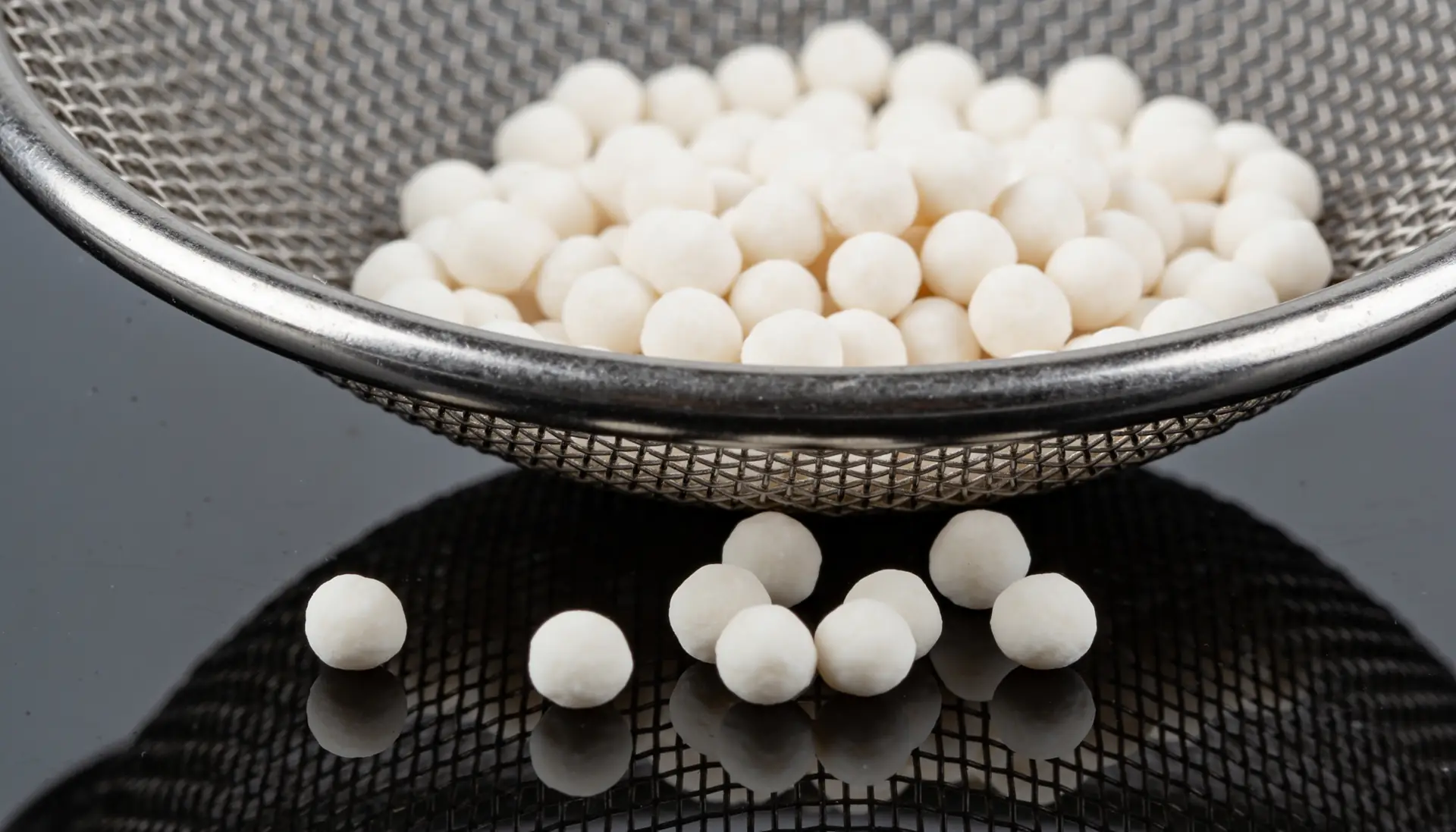
Proton pump inhibitors such as omeprazole, esomeprazole and lansoprazole break down in stomach acid. That is why they usually reach the capsule as pellets: small spheres that carry the drug and an enteric coat that holds until the intestine. The number on the pellet grade is its strength.
What the percentage means
Strength is the drug load by weight. Omeprazole pellets at 8.5% carry 8.5 g of omeprazole in every 100 g of pellets. The rest is the core, the binder, the protective layers and the enteric coat.
From strength to fill weight
The fill weight of each capsule is the dose divided by the strength:
| Dose | Strength | Fill weight per capsule |
|---|---|---|
| 20 mg | 8.5% | 235.3 mg |
| 20 mg | 7.5% | 266.7 mg |
| 40 mg | 8.5% | 470.6 mg |
| 40 mg | 22% | 181.8 mg |
A higher strength puts the same dose in less pellet mass, which can mean a smaller capsule. A lower strength gives more mass per dose, which some lines fill more precisely. Neither is better: the right one is the one your product was developed and validated with.
Base or salt?
Check how the strength is expressed. Esomeprazole, for example, is supplied as a salt, and the label claim of a finished product may be stated as the base. The certificate of analysis should say which.
What to confirm before you switch
- Assay and the basis it is expressed on
- Enteric performance against your pharmacopeia
- Particle size range and bulk density, which drive fill weight variation
- Water content and storage conditions
- Stability data from the manufacturer
General information for formulation and purchasing teams, not regulatory advice. R.J. Chemicals supplies omeprazole pellets at 7.5% and 8.5%, esomeprazole pellets at 8.5% and 22%, lansoprazole pellets at 8.5% and itraconazole pellets at 22.0%, as listed in its catalog; specifications are confirmed with each quote.